Is Vaping Better Than Smoking?

If you smoke: switching completely to vaping reduces your exposure to the toxins that cause the most harm in cigarette smoke.
If you do not smoke: vaping is not better for you. There is no risk to reduce, only a new one to take on.
Is vaping better than smoking? That two-part answer is the whole of it, and it is the position UK health bodies take. Everything below explains what sits behind it, with the source for each claim named so you can check it rather than take our word for it.
What the evidence actually says
In 2022, tobacco experts reviewed the evidence for the Office for Health Improvement and Disparities and concluded that in the short and medium term, vaping poses a small fraction of the risks of smoking. [documented — NHS Better Health, citing the OHID 2022 evidence review]
Three specific findings from that guidance are worth stating plainly:
- Cigarettes release thousands of chemicals when they burn, and up to 70 of them can cause cancer.
- Most of the harmful chemicals in cigarette smoke, including tar and carbon monoxide, are not present in vape aerosol.
- People who switch completely from smoking to vaping have reduced exposure to the toxins associated with cancer, lung disease, heart disease and stroke.
Sources for this section: NHS Better Health — vaping myths and the facts and the full GOV.UK evidence review.
The word doing the heavy lifting is “completely”
The NHS finding applies to people who stop smoking entirely. Smoking and vaping side by side does not deliver the same reduction, because the cigarettes are still supplying the tar and carbon monoxide.
That is the single most useful thing to take from this article. Cutting down while still smoking is not the same as switching.
Why combustion is the problem
A cigarette burns tobacco. A vape heats a liquid. That difference is where nearly all of the gap in risk comes from.
Burning produces tar, which coats the airways, and carbon monoxide, which binds to red blood cells in place of oxygen. Heating a liquid produces neither. Nicotine is present in both, and nicotine is addictive — but nicotine is not what causes the cancer and lung damage associated with smoking.
| Cigarette smoke | Vape aerosol | |
|---|---|---|
| How it is produced | Burning tobacco | Heating a liquid |
| Tar | Yes | No |
| Carbon monoxide | Yes | No |
| Chemical count | Thousands, up to 70 carcinogenic | Far fewer |
| Nicotine | Yes | Yes, at chosen strength |
| Overall risk | High | Lower, not risk-free |
“Lower risk” is not “safe”, and the NHS is explicit that vaping is not risk-free. Long-term effects are still being studied, because the products have not existed long enough for long-term data to exist.
What about second-hand exposure?
Second-hand cigarette smoke is a well-established harm, which is why smoke-free laws exist. Vape aerosol is a different case: there is no combustion, so the tar and carbon monoxide that make second-hand smoke dangerous are not there.
That does not make exhaled aerosol nothing. It is not clean air, and the considerate position is the same one most venues take — do not vape around other people without asking, and particularly not around children, pregnant women or anyone with a respiratory condition.
Is vaping better than smoking for everyone? No
| Your situation | Does switching help? |
|---|---|
| You currently smoke | Yes, if you stop smoking completely |
| You smoke and vape | Partly — the cigarettes still carry the risk |
| You quit years ago | No reason to start |
| You have never smoked | No — there is nothing to reduce |
| You are under 18 | No — and it is illegal to sell to you |
The healthiest option is neither. Nicotine is addictive, and vaping products are for adults 18 and over who already smoke. If you have never smoked, do not start vaping.
If you want to stop smoking with support rather than on your own, NHS Better Health quit smoking covers the free services available, including local stop smoking services.
What changes when you stop smoking
The NHS publishes a timeline for what happens after stopping smoking. Carbon monoxide clears from the body within around 48 hours, breathing starts to become easier after about 72 hours, circulation improves across two to twelve weeks, and the risk of a heart attack halves relative to a continuing smoker after a year. [documented — NHS quit smoking guidance]
Worth being precise here, because it is easy to overstate. That timeline is what stopping smoking does. Switching to vaping stops the combustion, which is what drives most of it — but nicotine intake continues, so this is not the same as quitting nicotine altogether.
Getting from dual use to a full switch
Most people who switch do not do it in one clean step. They vape some of the time and smoke the rest, and that middle stage is where the health benefit is smallest, because the cigarettes are still supplying the tar and carbon monoxide regardless of how much vaping sits alongside them.
Three things tend to keep people stuck there.
The nicotine strength is too low
This is the most common reason a switch fails. If the device does not satisfy the craving, the cigarettes come back to fill the gap. UK law caps nicotine e-liquid at 20mg/ml, which is the strength most prefilled kits use precisely because it is aimed at people replacing cigarettes. [documented — gov.uk, Tobacco and Related Products Regulations 2016]
Starting lower and stepping up rarely works. Starting at a strength that actually works, then reducing later once the cigarettes are gone, is the order that tends to hold.
The draw feels wrong
A cigarette is a tight, restricted pull — mouth-to-lung. A device with loose, airy airflow feels nothing like it, and that unfamiliarity is enough to send people back. Most kits sold for switchers are built around an MTL draw for this reason.
The specific cigarettes have not been dealt with
The first of the day, the one with coffee, the one outside the pub. These are habit triggers rather than nicotine ones, and they need replacing individually rather than all at once. Local stop smoking services exist for exactly this part, and they are free.
The everyday differences
Beyond health, the practical changes people notice most:
- Smell. Cigarette smoke clings to hair, clothes, cars and furniture. Vape aerosol disperses faster and does not leave the same tar residue.
- Staining. Tar is what yellows fingers, teeth and ceilings. Without combustion there is no tar to deposit.
- No ash or flame. No lighter, no ashtray, no butts.
- Charging instead of buying. A device needs power rather than a shop visit, which is a different kind of routine rather than simply an easier one.
On cost, the honest answer is that it depends entirely on how much you smoke now and which device you move to, so any specific monthly figure would be invented. What is reliably true is that a device bought once with consumables replaced afterwards has a different cost shape from buying a pack a day.
The UK rules worth knowing
Four apply to anyone buying a vape in the UK, and they explain most of what you will see on a shelf.
- Age of sale is 18. It is illegal to sell a vape to anyone younger, with or without nicotine.
- Nicotine strength is capped at 20mg/ml, and a nicotine-containing pod or tank at 2ml. [documented — gov.uk, TRPR 2016]
- Single-use vapes have not been legal to sell since 1 June 2025. A vape counts as single-use if it either has a battery you cannot recharge or is not refillable — either one alone. [documented — gov.uk single-use vapes ban guidance]
- Products must be notified to the MHRA before they can legally be sold. That is the check that matters if you are unsure whether something on a shelf is legitimate.
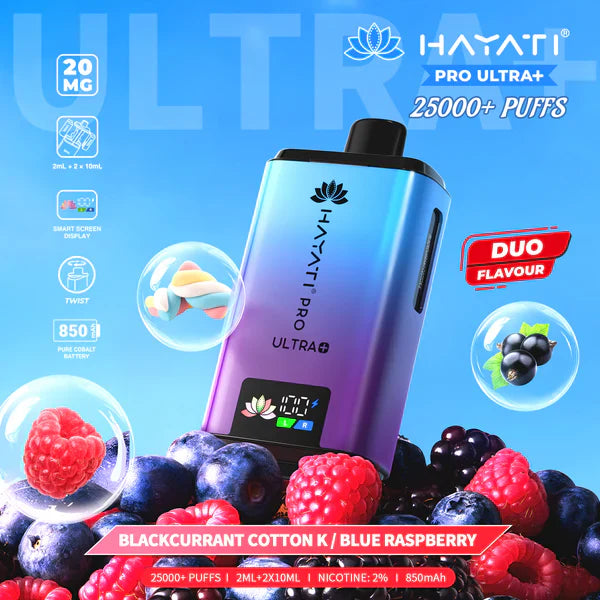
The 2ml cap is why high-capacity kits pair a small pod with separate refill containers rather than one large tank — the pod never holds more than the limit at any moment.
If you are switching, what to start with
Since the ban, the starting point is a rechargeable device with replaceable pods. Two things matter more than the device itself: a nicotine strength that satisfies the craving, and a mouth-to-lung draw that feels familiar. A device that does neither tends to end up unused with the cigarettes back in the pocket.
The first-time switcher range groups the kits built around that, and how prefilled pod systems work explains the device-and-pod split before you buy anything. If you would rather choose your own liquid strength, nic salt e-liquid is the refillable route, and the full pod kit range covers everything in between.
Prefilled pods or refillable
Prefilled pods are simpler — nothing to fill, nothing to prime. Refillable systems cost less per millilitre and let you choose the liquid, but they need more handling. Neither is better for your health; the difference is convenience and running cost.
Why flavour is not a side issue
Flavour gets treated as marketing, but for someone switching it is functional. A device that tastes like nothing gets abandoned, and an abandoned device means the cigarettes come back. Tobacco-style flavours suit some people making the change; many find a fruit or menthol profile easier precisely because it does not remind them of smoking.
There is no health advantage to one flavour over another. The only thing that matters is whether it keeps you off cigarettes.
Frequently asked questions
Is vaping completely safe?
No. The NHS describes it as substantially less harmful than smoking, not harmless, and notes that long-term effects are still being studied. The healthiest position is to use neither.
Is vaping better than smoking if I only smoke a few a day?
Switching completely still removes the combustion, so yes in that sense. But a light smoker has less risk to remove than a heavy one, and stopping both is better than swapping one for the other.
Does vaping stain walls and furniture like smoke does?
Not in the same way. The yellowing on walls and ceilings comes from tar, which vape aerosol does not contain. Heavy indoor vaping can still leave a light residue over time.
Does vaping affect life insurance?
It can. Many UK insurers assess nicotine use rather than smoking specifically, so vaping may be treated the same way as smoking when premiums are set. Check with the individual insurer rather than assuming.
Is it harder to stop vaping than to stop smoking?
Not necessarily, but nicotine is addictive either way, so stopping involves the same cravings and withdrawal. The NHS position is that the goal for someone using a vape to quit is eventually to stop vaping too.
Do vapes set off smoke alarms?
They can. Some alarms detect airborne particles rather than smoke specifically, so a dense cloud in a small or poorly ventilated room may trigger one.
Can you vape indoors where smoking is banned?
Not automatically. UK smoke-free laws cover smoking rather than vaping, but venues, landlords and transport operators set their own rules, and many prohibit both.
Is vaping safe around pets?
Do not vape directly at animals, and keep e-liquid well out of reach — nicotine is toxic if swallowed. Second-hand exposure is lower than cigarette smoke, but that is not the same as being safe for them.
What if I switch and still get cravings?
That usually means the nicotine strength is too low for what you were smoking, or a specific habit trigger has not been replaced. Both are fixable, and free local stop smoking services deal with exactly this.
What if I want to stop nicotine altogether?
That is the outcome the NHS points people towards. Free local stop smoking services can support both stopping smoking and, later, stopping vaping.
This article is general information for adult smokers considering switching, not medical advice. Health and regulatory claims are sourced to the NHS and gov.uk, with each source named in the section it supports. Nicotine is addictive. Vaping products are for adults aged 18 and over. If you do not smoke, do not start vaping. Updated September 2026.
-
Posted in
Switching From Smoking, UK Vape Rules, Vaping vs Smoking